Mathematics in the Modern World - Nature of Mathematics

Mathematical Language & Symbols

Language is the system of words, signs and symbols which people use to express ideas, thoughts and feelings. 

Mathematical Language is the system used to communicate mathematical ideas.


Four main Actions attributed to Problem Solving and Reasoning

  • Modeling and Formulating
  • Transforming and Manipulating
  • Inferring 
  • Communicating


Characteristics of Mathematical Language

  • Mathematics is about ideas - relationship, quantities, processes, measurements, reasoning and etcetera.
  • According to Jamison(2000) the use of language in Mathematics differ from the language of the ordinary speech in three important ways.

  1. Mathematical Language is non-temporal. There is no past, present, and future in mathematics.
  2. Mathematical Language is devoid of emotional content.
  3. Mathematical Language is precise.


Advantage of Mathematical Notation

Symbolic and Graphical is that it is highly compact and focused


Mathematical Expressions

  • Mathematical expression consists of terms.
  • The term of a mathematical expression contains a number and a letter separated by at least one of the fundamental operations.
  • In algebra, variables or letters are used to represent unknown quantities.


Mathematical expressions may be classified according to the number of terms as follows:

  • Monomial contains one term only.
Examples are: 2x; 5y; 8z; 4m
  • Binomial contains two terms.
Examples are: 2x+5y; 5y-9z; 8z+10m
  • Trinomial contains three terms.
Examples are: 2x+5y-3; 4m+n-10
  • Multinomial contains four or more terms.
Examples are: 2a-6b+7c-9; 4x+18y+2z+10


Mathematical Sentence

It is a combination of two mathematical expressions using a comparison operator.


Types of Mathematical Sentence

  • Open Sentence - it is not known whether or not the mathematical sentence is true or false. 

ex. 2xy < 3y

  • Closed Sentence - the mathematical sentence is known to be either true or false.

ex. 2(x + y) = 2x + 2y


Conventions of Mathematical Language

Context refers to the particular topics being studied. It is important to understand the context to understand mathematical symbols. 

Convention is a technique used by mathematicians, engineers, scientist in which each particular symbol has particular meaning.


Four basic concepts:

  • Set is a well-defined collection of distinct objects. 
  • Functions are mathematical quantities that give unique outputs to particular inputs. 
  • Relations are correspondence between a first set of variables such that for some elements of the first set variables, there correspond at least two elements of the second set of variables. 
  • Binary Operations are rules for combining two values to produce a new value.


Sets

Two ways to describe a set

  • Roster or Tabular Method

ex. E = {a, e, i, o, u}

  • Rule or Descriptive Method

ex. E = {x|x is a collection of vowels in the English Alphabet}


Kinds of Sets

  • Empty/Null/Void Set is a set that contains no element.
ex. C = {x|x is an integer less than 2 but greater than 1}
  • Finite Set is a set that contains a countable number of elements. 
ex. A = {a, b, c}
  • Infinite Set is a set that contains an uncountable number of elements.
ex. A = {…, -2, -1, 0, 1, 2, …} and B = {x|x is a set of whole numbers}
  • Universal Set is a set that contains all elements under consideration. 
ex. U = {x|x is an animal in Manila Zoo} and U = {1, 2, 3, …,100}
  • Unit Set (Singleton) is a set that contains only one element.
ex. E = {x|x is a whole number greater than 1 but less than 3}
  • Equal Sets are sets that contain exactly the same elements.
ex. A = {0, 1, 2, 3}       B = { 2, 0, 1,3}
  • Equivalent Sets are sets that contain the same number of elements. 
ex. A = {a, b, c, d}       B = { 2, 0, 1, 3}
  • Joint Sets are sets that have at least one common element.
ex. A = {a, b, c, d}       B = {d, e, f, g, h}
  • Disjoint Sets are sets that contain no common element. 
ex. A = {a, b, c, d}       B = { e, f, g, h}
  • Venn Diagram and Set Operations

  1. Similar to numbers, we can perform certain mathematical operations on sets.
  2. The principal operations are the intersection, union, difference, symmetric difference, and the complement of sets.
  3. Venn diagrams are used to visualize set operations. 
  4. In a Venn diagram, a rectangle shows the universal set, and all other sets are usually represented by circles within the rectangle. The shaded region represents the result of the operation.


Operations on Sets

Unions

Two sets can be "added" together. The union of A and B, denoted by AB, is the set of all things that are members of either A or B.

Examples: 

{1, 2} ∪ {1, 2} = {1, 2}. 

{1, 2} ∪ {2, 3} = {1, 2, 3}. 

{1, 2, 3} ∪ {3, 4, 5} = {1, 2, 3, 4, 5}

Some basic properties of unions:

A ∪ B = B ∪ A. 

A ∪ (B ∪ C) = (A ∪ B) ∪ C. 

A ∪ A = A


Intersections 

A new set can also be constructed by determining which members two sets have "in common". The intersection of A and B, denoted by AB, is the set of all things that are members of both A and B. If A B = ∅, then A and B are said to be disjoint.

Examples: 

{1, 2} ∩ {1, 2} = {1, 2}. 

{1, 2} ∩ {2, 3} = {2}. 

{1, 2} ∩ {3, 4} = ∅.

Some basic properties of intersections: 

A ∩ B = B ∩ A. 

A ∩ (B ∩ C) = (A ∩ B) ∩ C. 

A ∩ A = A. 

A ∩ ∅ = ∅.


Complements

Two sets can also be "subtracted". The relative complement of B in A (also called the set theoretic difference of A and B), denoted by A \ B (or AB), or A’ or A^c , the set of all elements that are members of A, but not members of B.

Examples: 

{1, 2} \ {1, 2} = ∅. 

{1, 2, 3, 4} \ {1, 3} = {2, 4}. 

Some basic properties of complements include the following: 

A \ B ≠ B \ A for A ≠ B. 

A ∪ A′ = U. 

A ∩ A′ = ∅. 

(A′)′ = A.


The Venn Diagram 

A Venn diagram, also called primary diagram, set diagram or logic diagram, is a diagram that shows all possible logical relations between a finite collection of different sets. These diagrams depict elements as points in the plane, and sets as regions inside closed curves. A Venn diagram consists of multiple overlapping closed curves, usually circles, each representing a set.


Set of operations on Venn Diagram


Share:

Drug Abuse Prevention

Drug abuse, or chemical dependency, is one of the major problems faced by every society in the world. If it were possible to add up all the direct and indirect result of drug abuse, including auto mobile accidents, violent crime and behavior, and the full range of health problems associated with the abuse of alcohol and other drugs, it might be the major problem in most countries today. It the economic and social effects of drug abuse are totaled, including the economic costs of health and care, job absenteeism, and reduced functioning and effects on the family and other social units, drug abuse can be considered one of the most serious social problems.


WHAT IS DRUG ABUSE?

Drug Abuse is the overuse of a drug without due regard to accepted medical practice resulting in the individual’s physical, mental, emotional, and behavioural impairment.


WHAT IS DRUG DEPENDENCE?

Drug Dependence is a compulsive behaviour brought about by drug abuse. In 1987, the American Medical Association declared all drug dependences to be diseases. When chemical dependences are viewed as diseases, their treatment and understanding are facilitated.


WHO IS A DRUG USER?

Drug User is another term for “drug addict”, which refers to an individual who is dependent on a certain drug/s. Smith et al. (1986) define an addict as one who is dependent  on certain drug/s. He defined addiction as a pathological process involving a compulsion to use a psychoactive drug, loss of control overuse of drug, and continuous use of the drug despite adverse consequences.


WHAT ARE THE COMMON SIGNS OF DRUG ABUSE?

  • Change in attendance at work or school.
  • Change from normal capabilities (work habits, efficiency, etc.)
  • Poor physical appearance, including inattention to dress and personal hygiene.
  • Constant wearing of sunglasses at inappropriate times(for instance, indoors or at night not only to hide diluted or constricted pupils but also to compensate the eyes inability to adjust to sunlight). Marijuana causes bloodshot eyes.
  • Stealing items that can be readily sold for cash(to support a drug habit).
  • Change in mood depending on the drug taken


WHAT ARE THE CLASSIFICATION OF DRUGS AND THEIR EFFECTS?

1. Alcohol Liquor, which is extracted from chemical compound as ethyl and hydrocarbon, is a dangerous chemical substance that triggers the central nervous system and may damage vital human organs.

         EFFECTS
  • Gives a feeling of relaxation and loss of inhibitions.
  • A sense of excitement due to the release of inhibitions.
  • Disrupted motor activity, motor skills and coordination.
  • Deep intoxication that can lead to “coma” and “death”.
  • Loss of self-control resulting in violent behavior.

2. Marijuana, Cannabis Sativa, is an annual plant that grows wild in many temperate parts of the world.

         EFFECTS              

  • Throat intoxication and coughing.
  • Increased heart beat  and pulse rate.
  • Reddening of the eyes, dizziness, bodily incoordination.
  • Sleepiness and decreased physical activity.
  • Possible chronic bronchitis and asthma.
  • Feeling of excitement and friendliness.
  • Distortion of time and space perception.


WHAT ARE THE REASONS BEHIND DRUG ABUSE?

THE MOST COMMON REASONS WHY DRUGS ARE ABUSED ARE AS  FOLLOWS:

  • For relief from problems – personal, family, school, or work.
  • To experience its effect on the mind and body.
  • To ease depression, boredom, pain, or misery.
  • Giving in to pressures from “peers” or other drug users.
  • For curiosity, due to misinformation from acquaintances.
  • For security feelings – with drugs they have self-confidence.


WHAT ARE THE ROLES OF SCHOOLS, COMMUNITY AND PARENTS IN PREVENTING DRUG ABUSE?

School - Every school must formulate a “drug policy” designed to help students and all school personnel fight drug abuse. Also, the school can initiate “drug awareness” program and realistic prevention efforts that will benefit the entire community. All students must take an active part in making this program a success.


Community - The community, as a whole, must work toward eradicating the drug menace by:

  • Conducting an anti-drug campaign, cooperating with authorities in the arrest of drug pushers.
  • Helping drug users to get  treatment from drug rehabilitation centers.

Parents - Parents must serve as a model to their children through the following:

  • If parents use medicines improperly and in large dosages, children will imitate this bad example. This should be avoided.
  • Parents must teach their children not to use drugs indiscriminately so as to develop in their children the correct drug attitude.
  • Parents should advice their children on their choice of friends and inculcate the basic knowledge about drug abuse.
  • If parents discover their son or daughter is into drugs, they must face the problem and seek professional help at once.
  • Parents must create a happy family life and maintain an open communication between them and their children.


WHAT ARE SOME PIECES OF HELPFUL AND TIMELY ADVICE FOR THIS PROBLEMS?

  • Maintain good physical and mental health.
  • Use drugs properly. Most drugs are beneficial when used under medical advice.
  • Understand your own self. Accept and respect yourself for what you are.
  • Develop your potentials. Engage in wholesome, productive, and fulfilling activities.
  • Learn to relate effectively to others. Have somebody to whom you can communicate your problems and other stresses without the use of drugs.
  • Seek professional help if you feel you cannot cope with your problems anymore.
  • Develop strong moral and spiritual foundation in life.


Share:

Understanding the Self Reviewer

Short Reviewer about Understanding the Self

I. MULTIPLE CHOICE

Instructions: Choose the correct answer.

(1) According to him virtue is necessary to attain happiness.

(a) Plato

(b) Sigmund Freud

(c) Socrates

(d) Aristotle

Correct Answer: (c) Socrates

Explanation: Socrates view of the relation between virtue and happiness is sometimes stated like this: virtue is both necessary and sufficient for happiness. Virtue is necessary for happiness in the sense that you can t truly be happy without being virtuous.


(2) What is the Latin term of Socratic Method?

(a) Elenchus

(b) Cogito

(c) Sophia

(d) Philo

Correct Answer: (a) Elenchus

Explanation: The Socratic method (also known as method of Elenchus, elenctic method, or Socratic debate) is a form of cooperative argumentative dialogue between individuals, based on asking and answering questions to stimulate critical thinking and to draw out ideas and underlying presuppositions.


(3) He believed that our soul is immortal and it is one of our essential qualities as a human being.

(a) Plato

(b) Socrates

(c) Kant

(d) St. Augustine

Correct Answer: (b) Socrates

Explanation: Socrates was the first thinker in Western history to focus the full power of reason on the human self: who we are, who we should be, and who we will become. Socrates was convinced that, in addition to our physical bodies, each person possesses an immortal soul that survives beyond the death of the body.


(4) This philosopher is greatly influenced by Socrates.

(a) Plato

(b) St. Augustine

(c) Aristotle

(d) Alan Watts

Correct Answer: (a) Plato

Explanation: Socrates was the inspiration for Plato, the thinker widely held to be the founder of the Western philosophical tradition. Plato in turn served as the teacher of Aristotle, thus establishing the famous triad of ancient philosophers: Socrates, Plato, and Aristotle.


(5) A theory that asserted the reality exist beyond the physical world that we know.

(a) Theory of Skepticism

(b) Theory of Evolution

(c) Theory of Collection

(d) Theory of Forms

Correct Answer: (d) Theory of Forms

Explanation: Plato's Theory of Forms asserts that the physical world is not really the 'real' world; instead, ultimate reality exists beyond our physical world. Plato discusses this theory in a few different dialogues, including the most famous one, called 'The Republic'.


(6) According to him Self is an immaterial soul.

(a) St. Augustine

(b) Plato

(c) Rene Descartes

(d) Maurice Merleau-Ponty

Correct Answer: (a) St. Augustine

Explanation: Augustine took from Plato the view that the human self is an immaterial soul that can think. Plato held that after death the souls of those who most love the forms would rise to contemplate the eternal truths, a sort of heaven beyond space and time.


(7)  He proposed that a doubt was a principal tool of disciplined inquiry.

(a) Rene Descartes

(b) Alan Watts

(c) David Hume

(d) Sigmund Freud

Correct Answer: (a) Rene Descartes

Explanation: Descartes proposed that doubt was a principal tool of disciplined inquiry, yet he could not doubt that he doubted. He reasoned that if he doubted, he was thinking, and therefore he must exist. Thus existence depended upon perception.


(8) He believed that we are born in this world that our mind is empty or a blank state.

(a) Maurice Merleau-Ponty

(b) Paul Churchland

(c) Immanuel Kant

(d) John Locke

Correct Answer: (d) John Locke

Explanation: Locke believed that the child is born with a blank mind (tabula rasa or blank slate), that he gains knowledge through his sense experiences, and that he improves upon that knowledge through reflection.


(9) According to this movement, the origin of all knowledge is sensed experience.

(a) Existentialism

(b) None of the above

(c) Empiricism

(d) Rationalism

Correct Answer: (c) Empiricism

Explanation: Empiricism is the theory that the origin of all knowledge is sense experience. It emphasizes the role of experience and evidence, especially sensory perception, in the formation of ideas, and argues that the only knowledge humans can have is a posteriori (i.e. based on experience).


(10) According to him the self is not in the body and it does not have the qualities of the body.

(a) Maurice Merleau-Ponty

(b) Sigmund Freud

(c) Immanuel Kant

(d) Paul Churchland

Correct Answer: (c) Immanuel Kant

Explanation: Kant's view of the self is transcendental(self is related to spiritual or nonphysical realm). Self is not the body; it is outside the body and does not have the qualities of the body. Kant proposed that it is knowledge which bridge the self and the material things together. 


(11) It is the self by which we are aware of alterations in our own state.

(a) Inner Self

(b) Self

(c) Outer Self

(d) Unconscious

Correct Answer: (a) Inner Self

Explanation: The inner self is an individual's personal, internal identity - one that is distinct from identities defined by external, social forces and relationships. It is closely linked to a person's values, beliefs, goals and motivations.


(12) He is known in his Psychoanalysis that became groundbreaking among other philosophers when it comes to the study of the mind.

(a) Sigmund Freud

(b) David Hume

(c) Paul Churchland

(d) Alan Watts

Correct Answer: (a) Sigmund Freud

Explanation: Sigmund Freud was the founder of psychoanalysis and, over his immensely productive and extraordinary career, developed groundbreaking theories about the nature and workings of the human mind, which went on to have an immeasurable impact on both psychology and Western culture as a whole.


(13) It usually means “Love of Wisdom” or “Loving of Knowledge”.

(a) Ecology

(b) Physiology

(c) Philosophy

(d) Psychology

Correct Answer: (c) Philosophy

Explanation: The word of Philosophy literally means "Love" (philo in greek) of "Wisdom" (Sophia). So a philosopher is somebody who loves wisdom.


(14) His idea is eliminative materialism or his philosophy stands on materialistic view.

(a) Paul Churchland

(b) Maurice Ponty

(c) David Hume

(d) Immanuel Kant

Correct Answer: (a) Paul Churchland

Explanation: Paul Churchland Eliminative Materialism (1984). Eliminative materialism (or eliminativism) is the radical claim that our ordinary, common-sense understanding of the mind is deeply wrong and that some or all ofthe mental states posited by common-sense do not actually exist.


(15) He insisted that mind and body are intrinsically connected.

(a) Paul Churchland

(b) Maurice Ponty

(c) David Hume

(d) Immanuel Kant

Correct Answer: (b) Maurice Ponty

Explanation: Maurice Ponty rejected the Cartesian mind-body dualism and insisted that the mind and the body are intrinsically connected. he added that the body is not a mere "house" where the mind resides, rather, it is through the lived experienced of the body that you perceive, are informed, and interact with the world.


II. TRUE OR FALSE

(1) According to Sigmund Freud ID has a contact to reality

(a) True

(b) False

Correct Answer: (b) False

Explanation: The ID is not affected by reality, logic or the everyday world, as it operates within the unconscious part of the mind. The id operates on the pleasure principle (Freud, 1920) which is the idea that every wishful impulse should be satisfied immediately, regardless of the consequences.


(2) Rational part of our soul should rule over other parts of the soul.

(a) True

(b) False

Correct Answer: (a) True

Explanation: The rational part seeks truth and uses logical thinking. Plato's three parts of the soul are present in every person and none of them can be eliminated, although only one part of the soul can rule the whole at any given time. For Plato, a just person and a just city will be ruled by the rational part.


(3) We can say that we are conscious if we can perform apperception.

(a) True

(b) False

Correct Answer: (a) True

Explanation: Apperception is the apprehension of a mental state – a representation, in Kant's terminology – as one's own; one might characterize it as the self-ascription or self-attribution of a mental state


(4) Super-ego works with the reality principle.

(a) True

(b) False

Correct Answer: (b) False

Explanation: The ego operates based on the reality principle, which strives to satisfy the id's desires in realistic and socially appropriate ways. The reality principle weighs the costs and benefits of an action before deciding to act upon or abandon impulses.


(5) Unconscious mind includes something that we conceal.

(a) True

(b) False

Correct Answer: (a) True

Explanation: The unconscious can include repressed feelings, hidden memories, habits, thoughts, desires, and reactions. Memories and emotions that are too painful, embarrassing, shameful, or distressing to consciously face are stored in the enormous reservoir that makes up the unconscious mind.


III. IDENTIFICATION

(1) ________ is a systematic process of being skeptical about the truth of one’s belief.

Correct Answer: Cartesian Doubt

Explanation: Cartesian doubt is a systematic process of being skeptical about (or doubting) the truth of one's beliefs, which has become a characteristic method in philosophy. 


(2) ________ is a theory that described the self as collection of different perception that moving in a very fast successive manner.

Correct Answer: Bundle Theory

Explanation: Bundle TheoryTheory advanced by David Hume to the effect that the mind is merely a bundle of perceptions without deeper unity or cohesion, related only by resemblance, succession, and causation.


(3) ________ is the most divine aspect of human being.

Correct Answer: Soul

Explanation: In theology, the soul is further defined as that part of the individual which partakes of divinity and often is considered to survive the death of the body.


(4) ________ is the totality of human mind conscious and unconscious.

Correct Answer: Psyche

Explanation: In psychology, the psyche is the totality of the human mind, conscious and unconscious. Many thinkers, including Carl Jung, also include in this definition the overlap and tension between the personal and the collective elements in man.


Share:

Feedback and Control Systems Technology

Discussion about FCS Technology that is available in the market

I. Inverter Air Conditioner
II. What is it for?

2.1 What is Air Conditioner

An air conditioner is a system that is used to cool down a space by removing heat from the space and moving it to some outside area. The cool air can then be moved throughout a building through ventilation.

2.2 What is an Inverter AC?

An inverter is energy saving technology eliminates wasted operation in air conditioners by efficiently controlling motor speed.

Air conditioners maintain set temperature by cooling when room temperature rises above the set temperature and heating when the room temperature falls below the set temperature. In inverter type air conditioners, temperature is adjusted by changing motor speed without turning the motor ON and OFF.

Inverter AC


III. Simple Block diagram and flowchart of the Inverter Air Conditioner

Figure 3.1: Block Diagram of how Inverter AC works


Figure 3.2: Flowchart of how Inverter AC works


IV. Why an Inverter AC is an FCS technology?

Well, most of the major AC brands use a combination of sensors and sensor technology to ensure intelligent cooling. Feedback Control System principles applies in an Inverter Air Conditioner just by looking at the Figure 3.2 Flowchart of Inverter AC it has a sensor that monitors the temperature of the inverter then act upon it, it demonstrates how it compensate for unexpected environmental changes acting on the system and maintain the desired room temperature. Most models these days are equipped with intelligent image sensor technology to minimize cooling waste while providing even cooling comfort for indoor users. In Hitachi`s style, even the new Daikin ACS is equipped with an intelligent people sensor that detects the presence (and number) of people in order to optimize room cooling.


V. Advantages and Disadvantages of Inverter Air Conditioner

Advantages of Inverter Air Conditioner

The inverter AC has many benefits. But the most obvious reasons for its popularity are;

  • Energy Efficient Operations – In the absence of the compressor constantly turning on and off, there is no power surge or fluctuations. Therefore, inverter air conditioners reduce power consumption by almost 40% annually. They allow maintenance of comfortable temperature even with less energy consumption. Even better is the fact that since it consumes less power, it is incredibly safe for home wiring.
  • Cost-Effective – Since the power consumption in the running of inverter AC is low, the bills are also on the lower side. Its energy efficient operations translate to its cost-effectiveness and make your pockets happy.
  • Rapid Cooling – Inverter AC is capable of running the compressor at high speed. As a result, it can cool a room faster. The compressor of a conventional AC runs at a fixed speed only, and hence, it takes more time to cool a room.
  • Silent Operation – Compared to a traditional AC, the inverter air conditioner runs at low speed. The compressor is also comparatively silent. Therefore, it produces little to no noise inside the home. Its silent operations allow you a sound and comfortable sleep.
  • Other Benefits – Lesser known, but equally important, benefits of inverter AC include its capability to run on solar panels, environment-friendly nature because of the use of good quality refrigerants and the fact that its high price is offset with the massive saving in electricity bills.

Disadvantages of Inverter Air Conditioner

Everything is not rosy when it comes to inverter ACs.The key disadvantages of inverter AC include;

  • Bad Insulation Increases Costs – Inverter AC is energy efficient only when the room is properly insulated. In case the insulation in the room is not up to the notch, the power consumption will be high, and as such, your electricity bill will also increase proportionately.
  • Expensive Repair & Maintenance – The components that make an inverter AC are expensive. Therefore, its repair and maintenance are a costly service. You need to think about the cost involved in case of any issues, whether your pocket can afford it or not, before making the purchase decision.
  • Increase Humidity – If the inverter AC is too powerful for your room, it will run frequent short cycles to maintain the desired room temperature. This will result in the room getting either too hot or too cold rapidly, but without effectively dehumidifying the air. What happens in such cases is that the room achieves the targeted temperature and yet maintains high humidity due to which it does not feel comfortable.
  • Costly Purchase – Inverter AC is a new concept. The technology involved is also relatively new. The demand for these air conditioners is still not high in the market. To top it all, it is priced high because of its expensive components. Inverter AC is not a pocket-friendly solution for families who budget their expenses.


VI. Conclusion

Inverter AC’s can reach the desired temperature swiftly and effectively by starting at full throttle. Once the ideal temperature is reached, the process is repetitively adjusted to retain a comfortable climate without any fluctuations. To continuously control the temperature, an inverter is used to regulate the speed of the compressor motor.

In this hot generation wherein global warming is intolerable, we tend to like purchasing air conditioners especially if we can afford it but still want to consider the possible expenses. Inverter AC is more expensive than the normal AC’s however if you think in terms of long-term investment Inverter AC is more cost efficient in a long run since it’s energy efficient.


VII. References


Share:

Mathematics in the Modern World

What is Mathematics?

  • It is the study of how numbers, quantities, and shapes are related to one another.
  • It includes arithmetic, algebra, trigonometry, geometry, statistics, and calculus.
  • It cultivates capacities for creativity, reasoning, critical thinking, spatial thinking, and etcetera.
  • It gives you the chance to use a variety of methods to solve both simple and complex problems in many real-world situations.
  • It is a universal way to make sense of the world and to communicate understanding of concepts and rules using the mathematical symbols, signs, proofs, language and conventions.

What is the purpose of Mathematics? 

  •  It helps organize patterns and regularities in the world.
  • The geometry of most patterns in nature can be associated either directly or indirectly to mathematical numbers.
  • Understanding the content of other school subjects, such as science, social studies, and even music and art, requires a solid foundation in mathematics.
  • It helps predict the behavior of nature and phenomena in the world.
  • It helps control nature and occurrences in the world for the good of mankind.
  • It has become indispensable because of its numerous applications. 


Patterns and Numbers in Nature and the world

  • Patterns in nature are visible regularities found in natural world.
  • These patterns persist in different contexts and can be modelled mathematically.
  • Natural patterns may consist of spirals, symmetries, mosaics, stripes, spots, etcetera.
  • A closer and more in-depth study reveals that these patterns share numerous similarities and resemblances and appear to evolve through a variety of complex steps.
  • The early Greek philosophers Plato, Pythagoras, and Empedocles studied patterns to explain nature's order, which led to our current understanding of visible patterns.


  • In the 19th century, Belgian physicist Joseph Plateau examined soap films which led him to develop the idea of a minimal surface.


  • Ernst Haeckel, a German artist and biologist, painted hundreds of marine creatures to emphasize their symmetry.


  • D'Arcy Thompson, a Scottish biologist, was the first to investigate growth patterns in both animals and plants, demonstrating that simple equations could explain spiral growth.


  • British mathematician Alan Turing predicted in the 20th century the mechanisms of morphogenesis that led to rise of patterns of stripes and spots.


  • According to Patterns of Nature (2017), Hungarian biologist Aristid Lindenmayer and French-American mathematician Benoit Mandelbrot demonstrated how the mathematics of fractals could be used to create patterns in plant growth.


  • In his landscapes, W. Gary Smith employs eight patterns: dendritic, scattered, fractured, mosaic, naturalistic drift, serpentine, spiral, and radial. These patterns can be found in animals, rocks, rivers, stars, or human creations(Goral, 2017).
  • Numbers are everywhere in Nature.
  • Mathematicians discovered that numbers appear in numerous natural patterns: Two wings on a bird, three leaflets on a clover, four hooves on a deer, five petals on a buttercup, six legs on an insect, eight arms on an octopus, seven colors on a rainbow, and many more.


The Fibonacci Sequence 

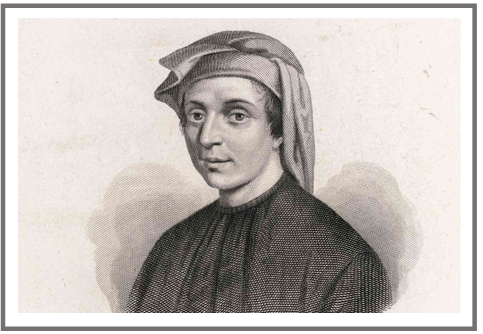
  • Leonardo Pisano Bogollo lived in Italy from 1170 to 1250. (Fibonacci Sequence, 2016) His nickname, Fibonacci, roughly translates to "Son of Bonacci."
  • He helped spread Hindu Arabic numerals (0,1,2,3,4,5,6,7,8, and 9) throughout Europe in place of Roman numerals (I, II, III, IV, V, etc.) in addition to being famous for the Fibonacci Sequence.
  • Fibonacci Day is November 23, as it has the digits “ 1, 1, 2, 3” which is part of the sequence which he developed.


For centuries, mathematicians, artists, designers, and scientists have been captivated by the renown Fibonacci sequence. The Fibonacci sequence, which is also known as the Golden Ratio, goes like this:


The ratio of any two consecutive Fibonacci numbers is very close to the Golden Ratio, also known as phi (Φ), which is about 1.618034... The closer the approximation is, the larger the pair of Fibonacci numbers that are taken into consideration.


In geometry, a golden spiral is a logarithmic spiral whose growth factor is Φ, the Golden Ratio. That is, a golden spiral gets wider (or farther from its origin) by a factor of Φ for every quarter turn it makes (Golden Spiral, 2017).

Share: